

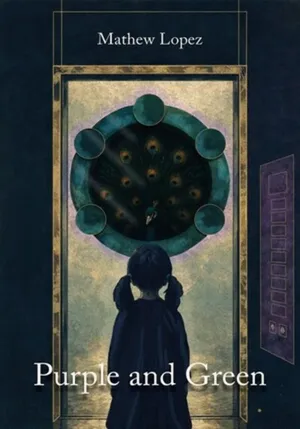
Free preview
A peacock of one's own
The majority of Fia’s eighth birthday came and went without incident. She’d spent the school day staring into space, wondering what her family had bought for her, and how her dad had managed to wrap the pet peacock she’d asked for, without suffocating it. She really hoped that he’d remembered to get her a peacock and not a peahen. She’d seen the difference between the genders in her animal encyclopaedia and hated how grey and dull the hens were. She’d resigned herself to putting on a brave face and smiling for her dad’s sake, if he’d bought her the wrong gender, but she knew, deep down, she would probably never forgive him.
By the time Wren came to collect her from school, Fia was ravenous for presents.
Wren was Fia’s older brother. He was five years older than her, and he was enrolled at a prestigious art school. Everyone was always going on about how talented he was, but Fia wasn’t convinced. Their dad said Wren’s paintings were abstract, but Fia had figured out that abstract was just an adult codeword, for rubbish. None of Wren’s paintings ever looked like anything, except a bunch of random colours and shapes, slapped, haphazardly, onto canvas.
‘Walk faster,’ Fia squeaked, as her feet pounded the London pavement.
Wren smiled, taking one stride for every two of Fia’s. ‘Don’t worry,’ he said. ‘Your presents will still be there when we get home.’
‘I hope Dad remembered to poke airholes.’
‘What?’
‘My peacock.’ Fia rolled her eyes. ‘I hope Dad remembered to poke airholes in the wrapping paper, or it won’t be able to breath.’ She imagined pulling back the paper and Sellotape to reveal a dead bird, its vibrant plumage stiff and unmoving. Tears pricked at her eyes, for a moment, until she remembered their uncle had stuffed his pet dog, after it’d died. ‘Could I still keep it as a teddy, even if it is dead?’ she asked.
‘Dad hasn’t bought you a peacock.’
‘You don’t know that.’
‘I do. You can’t buy a peacock in London.’
‘He could have ordered one online.’
Wren sighed. ‘You’re such a baby, Fia. Why do you think Dad didn’t let you open your presents this morning?’
‘Because Granny and Granddad are coming over for dinner, and they want to watch me open them, too,’ Fia parroted what her father had said to her, that morning, when she’d begged to open her presents before school.
‘He hasn’t bought you anything, yet. He’d probably forgotten it was even your birthday. I bet he buys you a load of crap on his way home from work and doesn’t even bother to wrap it.’
‘Nuh-uh. You don’t know what you’re talking about, Wren.’
‘Alright, we’ll see when we get home then. But I’d bet you a million pounds, there’s no peacock.’
‘Deal!’
Fia knew that Wren didn’t have a million pounds to bet, but she wasn’t going to let him off that easily. He’d just have to spend the rest of his life in debt to her, if that’s what it came down to. It would serve him right for being so grumpy all the time.
Wren took Fia by the hand, as they rounded the dock beside the tower they lived in. At over seventy storeys tall, the tower was the tallest residential building in all of Western Europe. The apartments inside were some of the most luxurious in London, with views over Canary Wharf and the Thames.
‘We really hit the jackpot with this place,’ Fia’s dad had said, when they first moved in. Fia had hugged her dad and told him how grateful she was, but, secretly, she had been afraid of the tower. She’d thought it was only pretending to be a tower, and not a giant, glass-and-metal crocodile, all cold blooded and reptilian.
Fia’s mum had died shortly before the family had been due to move into their new apartment, and Fia had known, from the first second she saw the tower, that it had eaten her mother.
For the first few weeks after moving, Fia slept as little as possible. She fought to keep her eyes open, terrified that the tower would devour her in her sleep. But as the months passed and the tower remained dormant, Fia had gradually got used to the monster. Then, one night, she’d had a dream that the tower had grown human legs and was stomping around London nightclubs, wearing her mother’s favourite evening dress – a red dress, with a tiny rip in the hem, that only Fia knew about. After that, Fia had started to believe that the tower was possessed by the spirit of her late mother. Instead of fearing it, she’d started to see the tower as a symbol of protection. It was like living inside her very own Mechagodzilla.
Fia knew most of the concierge and security staff that worked in the tower by name. She’d expected a few of them to buy her presents, for her birthday, but when Fia and Wren walked into the main foyer, the place was almost empty. The only person in there was an old man that neither of them had ever seen before.
The old man was short and walked with a stoop, which made him look even shorter. His pale head was bald and liver-spotted, and he had a grey goatee beard that he’d tied into a puff with an elastic band. Wren nodded politely at the old man, then averted his gaze, but Fia couldn’t take her eyes off him. ‘He’s a bit scruffy, isn’t he?’ she said.
‘Shhh,’ Wren shot her a furious look, ‘he’ll hear you.’
The old man sat down on a chair, behind the reception desk. He was so short that all Fia could see of him above the desk was the top of his head. Mottled and pale, it looked like the egg of some huge bird.
Wren pushed the button for the lift and squeezed his sister’s hand. Fia continued to watch the old man, who was now using the handle beneath his chair to pump the chair higher. Just as his chin finally cleared the desk, the lift arrived, and Wren yanked Fia inside. The old man grinned, revealing a mouth full of golden teeth.
‘Well, he won’t last long.’ Wren shuddered, once the lift doors had slid shut. ‘I can’t believe they hired someone like that.’ He pushed the button for the seventieth floor, but nothing happened. He pushed it again and again, but the button refused to light up, and the lift refused to move.
Click. A faint buzz came over the intercom. Sorry about this, the voice was thin and shaky, bit of a problem with the lift, you see. Which floor was it you wanted?
‘Floor seventy, please,’ Wren replied.
Floor seven hundred and seventy-seven it is.
‘Wait, no—’
Click. The intercom fell silent. The lift lurched upward. Fia felt as though she was being pressed into the floor. Her knees trembled as her legs strained to keep her standing. Wren was gripping her hand so tightly he was almost crushing it, but Fia didn’t feel frightened at all. They were in their tower, after all. Mum wouldn't let anything bad happen to them.
The seven hundred and seventy-seventh floor
When the lift finally stopped, Fia and Wren swayed from side to side, struggling to regain their balance. The doors in front of them slid open to reveal nothing but darkness on the floor beyond.
Fia looked up at the lift’s digital display, but the screen was blank. ‘Where are we?’ she asked.
‘I don’t know,’ Wren replied, letting go of Fia’s hand, ‘but this isn’t our floor.’ He pushed the button marked seventy, again, and again, nothing happened.
‘The lift’s broken.’
‘I know, but what else am I supposed to do?’ Wren hammered all the buttons, repeatedly, but none of them responded.
‘Dad said we should use the stairs if there’s an emergency.’
‘He meant if the tower is on fire, not an emergency like this. Something weird is going on here. The receptionist said he was sending us to floor seven hundred and seventy-seven, but that’s impossible – there aren’t that many floors. And you felt how fast the lift was moving.’ Wren reached into his trouser pocket and pulled out his phone. The screen lit up as he raised the device to his face, but there was no signal. ‘I always have signal. This doesn’t make any sense.’
Fia had stopped listening to Wren. She was thinking about climbing down over seven hundred stories worth of stairs and didn’t much fancy it. A few weeks before, Dad had taken her and Wren to Trafalgar Square, and Fia’s legs had got tired just climbing the five stone steps up to the National Gallery. There was no way she’d make it down the billions of stairs she assumed it would take for them to get home.
‘We’re going to stay here,’ Wren said, shoving his phone back into his pocket. He took his backpack from his shoulders, set it down on the floor of the lift, and sat down on top of it. He wrapped his arms around his shins and pressed his forehead into his knees, hiding his face. This was a habit he’d only picked up, after their mum died. Now, whenever he was upset, he hid his face from Fia. But Fia wasn’t stupid. She saw the way his shoulders shook and knew exactly what was happening.
‘If we just wait here,’ Wren said, his voice muffled, ‘Dad will eventually notice we’ve gone missing. He has to, right? Then, he’ll call down to ask if anyone’s seen us, and the receptionist will tell him about the prank he’s pulled. Dad will come fetch us, we’ll all laugh, and everything will be ok. Actually, you know what, I bet Dad planned all this, for your birthday, or something.’
‘What if it’s a surprise party,’ Fia said, leaning out of the lift doors. ‘Maybe Granny and Granddad are hiding down the hall, and that’s why all the lights are off.’
As Fia peered into the seven hundred and seventy-seventh floor, her eyes began to adjust to the gloom. She couldn’t see much, except a jumble of bizarre silhouettes that she couldn’t quite distinguish. Nearby, there was something that looked like a cabinet, wooden, maybe, and loaded with… jam jars? The messiness of it all reminded her of one of Wren’s paintings. She screwed up her face. This was not the hallway of the seventieth floor, that was for sure.
‘What a load of rubbish,’ she whispered.
Rubbish? A voice boomed in the darkness. How dare you.
An invisible hand enveloped Fia’s body and ripped her from the lift. She landed in a heap on the floor. Before she or Wren could do anything, the lift doors cracked shut. Wren was gone. Fia was alone in the umbra.
‘Welcome, child,’ a voice said, sounding rather childlike, itself.
Fia stumbled to her feet. The chandelier above her head flickered to life. Flames spouted from the tips of each of its thirteen candles, as though the air around the wicks had been ordered to combust whenever someone entered the room. In the warm light, Fia could see that the doors to the lift had vanished. She really was all on her own.
‘I said, welcome, child,’ the childlike voice repeated.
Fia turned around and saw that the voice was coming from a huge, round mirror, floating in front of her. The mirror looked expensive but old, its bronze rim now coated in a teal patina. In the glass of the mirror, Fia could see her reflection. Except, it couldn’t have been her real reflection, because the Fia in the mirror was moving all on her own.
‘Who are you?’ Fia asked.
‘My master has not given me a name, but he said to think of me as your guide to the seven hundred and seventy-seventh floor,’ the Fia in the mirror replied.
‘Were you the one who grabbed me?’
The Fia in the mirror pounded her fists against the mirror’s invisible surface, as though she was trapped inside and wanted to escape. ‘As you can see,’ the mirror said, speaking through Fia’s reflection, ‘I can imitate image and sound within the confines of my glass, but the images I conjure have no corporeal form.’
Fia scowled at the mirror. ‘Stop it.’
‘Pardon?’
‘If you’re going to look like me and sound like me, then you need to stop talking funny. It’s creepy.’
‘I see.’ Fog fell over the mirror’s surface for a moment. When the fog lifted, Wren’s face had taken the place of Fia’s reflection. ‘Is that better?’ the mirror asked, mimicking Wren’s voice, perfectly.
‘Ewww, no!’ Fia stamped her feet. ‘That’s much, much worse.’
‘Well then, how should I look and sound?’
Fia thought for a moment, but only a moment, before answering, ‘Like a peacock.’
A fog fell over the mirror’s glass once more, then, the head of a peacock appeared, with a full train of blue and green tailfeathers, fanned-out, proudly, behind it. The bird glared at Fia through ancient amber eyes.
‘Happy now?’ the mirror asked, in a voice as shrill as a peacock’s siren call.
Fia nodded.
‘Then, please come with me to meet my master. He is the one that summoned you here, after all.’ The mirror began to float away, but Fia didn’t move. ‘What’s the matter?’
‘Where are the rest of my presents?’ Fia peered around the room. It looked like she was in the backroom of a particularly disorganised antique shop. The whole place stunk of damp wicker and dusty cushions. Now that the cabinet she’d seen from the lift was right beside her, Fia saw that it was filled to the brim with glass bottles, jars, and vials. She picked up one of the smaller bottles and held it up to the candlelight. Inside the bottle was a ship, but not the kind she’d seen inside bottles before, with sails, a wooden hull, and some poor woman carved into the bow, as a figurehead. Instead, inside this bottle was a miniature aircraft carrier, complete with tiny planes and living, breathing soldiers. She watched as the tiny, uniformed men scurried around on the deck of the ship, fuelling the planes, clearing the runway, and getting everything ready for take-off. ‘I want this,’ she said.
‘Consider it yours.’
Fia shoved the bottle into the pocket of her school cardigan. The neck of the bottle jutted out of her pocket, and the weight of the glass stretched the fibres of the wool. She reached out, again, and grabbed a jar with a gingham lid from the cabinet. The jar was full of a thick fluid. Inside the fluid were three green pickles and a single eyeball. ‘And I want this, too.’
‘A wise choice.’
Fia shook the jar and watched as the eyeball bounced around, inside. It was the world’s strangest snow globe, but she liked it. She knew Wren would be jealous when he saw what she’d got. He’d never been given an eyeball or a battleship in a bottle for his birthday.
Meeting the master
Fia followed the enchanted mirror through room after room, each one lit by a new cluster of self-lighting candles. As she walked, Fia noticed there was a symbol she’d seen before, carved into the centre of the mirror’s backing. It was a Tudor rose. She hummed the tune of the rhyme her teacher had taught her to remember the fate of Henry VIII’s wives. Divorced, beheaded, died. Divorced, beheaded, survived…
Each of the rooms on the seven hundred and seventy-seventh floor had been filled with various curiosities, yet Fia was beginning to feel disheartened. There was an umbrella stand made out of a hollowed-out elephant’s foot; a painting, as long as her bedroom, of a unicorn going horn to horn with a rhinoceros; a spinning top that spun, perpetually, upside down on the ceiling; a lamb asleep in a silver trough (at least, she hoped it was asleep); the shrunken heads of six white rabbits; and a balloon dog that meowed like a cat, when she pulled its tail. All these strange things had seemed exciting, at first, but none of them were what Fia had asked for. She was beginning to worry that Wren might’ve been right – that her dad really had bought her a load of random junk to make up for forgetting her birthday.
‘Your boss has a lot of strange things,’ Fia said, stepping into a billiard room that smelt of cigars. The walls of the billiard room were clad in a wood that was the colour of nutmeg. For the first time that day, Fia felt frightened. The dark wood reminded her of something she would rather not have been reminded of. A black husk. A London tower singed by flames. She’d seen the carcass on television. A public cremation.
‘You should tell my master how impressed you are with his collection,’ the mirror said. ‘It will please him greatly.’
‘Why? Is he a very proud man?’
‘Of course. But aren’t all men proud?’
Fia thought of her father and the way he bragged about Wren’s paintings, as if he’d painted them himself.
‘I guess so,’ she said, pausing at the vast billiards table, at the centre of the room. She gripped the nearest cushion tightly in her hands and pulled herself onto the tips of her toes to see what was on top of the table. The surface of the table had been laid with a green felt, and on top of the felt were two platoons of wooden soldiers. Half of the soldiers had been painted blue, and the other half painted red. If it wasn’t for the black muskets in their hands, they would’ve looked more like two football teams than opposing military forces. Compared to everything else Fia had seen, they seemed disappointingly ordinary.
‘This is my master’s war room,’ the mirror explained. ‘During times of conflict, the master imbues those wooden pieces with a voodoo that manipulates the actions of real soldiers. The outcomes of many great battles have been decided in this room.’
Fia sunk to her heels and puffed out her cheeks. ‘Boring,’ she said. ‘I don’t like this room, it’s ugly.’
The mirror led Fia out of the billiards room and into a tunnel-like hallway. The walls in the hall were covered in creeping vines that stretched their tiny green shoots out toward Fia, as she passed. At the end of the hall, there was a huge wooden door. Wisteria and honeysuckle flowers blossomed and quickly died on the vines that writhed around door’s architrave. As the flowers died, their petals fell to the floor to create a soft carpet of lilac and orange.
‘We have arrived,’ the mirror said, stopping in front of the door. ‘This is my master’s sleeping quarters.’
The door swung open to reveal the kind of bedroom Fia imagined a prince would sleep in. The walls were lined with paintings of men with long hair and moustaches that twirled at the ends. At the centre of the room, there was a fourposter bed, draped with shimmering emerald curtains.
Finally, you have arrived. You have no idea how long I have waited for this day, said a man’s voice, from behind the curtains.
Fia recognised the voice. It was the same voice she’d heard when she’d been separated from Wren.
‘You know,’ Fia said, stepping into the master’s bedroom, ‘Dad always tells us, it’s rude to talk to someone without looking at them.’
The curtains around the bed twitched, then parted. The master of the seven hundred and seventy-seventh floor sat up and swung his legs around to face Fia. His feet made no sound as they nestled into the rug that stretched out from beneath his bed, but the glint of his golden toenails caught Fia’s eye. She looked the master up and down. He was a tall and slender young man, with fair skin, and monstrous fingers that were long enough to wrap the whole way around Fia’s chest and back. He wore linen pyjamas, a sleeping mask, and a stiff, pointed nightcap. His hair was long and brown and curled at the ends. The way it cascaded down from beneath his hat reminded Fia of her mother’s hair in the summertime, and the way it had fallen in loose curls, from beneath a wide-brimmed hat, made of straw.
‘Who are you?’ she asked.
I am no one, really. Just a lowly archivist; a keeper of rare things, a preserver of treasures.
‘Well, I think you’re rude.’
Pardon?
Fia pointed to her eyes. ‘You’re still not looking at me.’
The master raised his hands to his own eyes and patted his sleeping mask, gently, as though he hadn’t been aware that he was still wearing it. Sorry, let me turn this thing on, he said. He placed both hands over his face and counted to three. When he removed his hands, a pair of embroidered eyes appeared on his sleeping mask. The eyes rolled around the room wildly, for a moment. The stitching bulged and strained at the speed of the movements, until the eyes settled on Fia. Impressed?
‘Not really,’ Fia replied, folding her arms across her chest. Actually, she was starting to feel quite fed up. If all of this had been organised as a birthday surprise for her, why was the master showing off so much? It felt more like a party for him, than Fia. She thought he was probably the rudest man she’d ever met. ‘Can I go now?’ she asked. ‘I want to see Granny and Granddad.’
Do not be so impatient. You have not yet heard what I have to offer.
‘My pockets are already full,’ Fia said, patting her cardigan pockets. ‘And, besides, most of your stuff is rubbish.’
The eyes on the sleep mask narrowed.
My collection is not rubbish. I have wandered for millions of years, gathering curiosities from realities you cannot even imagine. You have only been given a taste of all I can offer. You have not seen my menagerie of ancient beasts, my arboretum of intergalactic herbs and spices, my army of men who will die for any cause I deem worthy--
‘I don’t care about any of that,’ Fia said, cutting the master off. ‘All I want is a peacock.’
A peacock? I have dozens of peacocks. Hundreds even. Perhaps thousands. More peacocks than you could even count, that is for sure. And they are some of the finest peacocks anyone has ever laid eyes on. Species from parallel existences, with snakes for tail feathers, like the hair of Medusa.
‘Thousands? Really?’
Really.
Even Fia had to admit, owning thousands of peacocks was pretty impressive. ‘And I can have one of them?’
You can have all of them, if you stay here with me. Fia mulled the master’s offer over. If she stayed too long, she would be late for dinner with Granny and Granddad. But then again, it was her birthday. ‘How long do you want me to stay for?’ she asked. ‘Dad doesn’t let me do sleepovers, and he’ll tell me off if I miss dinner completely.’
I want you to stay forever, Fia, the master replied, spreading his arms wide, as he spoke.
‘Forever?’
I need an heir, and I have been waiting to find the right child. If you stay here and manage to outlive me, then everything in my collection will be yours. Is that not a generous offer?
‘What about before you die? What do I do until then?’
You work for me and serve as part of my collection.
Fia scowled up at the master. ‘That sounds really boring.’
The eyes on the master’s sleeping mask wrinkled at the corners and a huge smile spread across his lips. I was right about you. You are just the creature I have been looking for. Boredom is what drives beings like us. It is insufferable to our kind. That is why I think you should remain here, with me, forever. Imagine the fun we can have, together.
Fia balled her hands into fists and stomped her feet. ‘No way’ she said. ‘In fact, I don’t want to spend a second longer with you. I want to go home.’
Hmmm, is that right? The master looked up at the ceiling, while he thought. Well, fine then, I shall not keep you against your will. But let us make this fun. I will allow you to leave, but only if you manage to overcome a little challenge.
‘What do you mean?’
You must take a ride on our infinite paternoster – a perpetual motion machine that stops at an endless number of realities. If you manage to exit on the right floor, you will find yourself back at home with Wren and your father. If you exit on the wrong floor, however, you will be lost on some other plain of existence, for all eternity. If you are not brave enough, then you can of course stay here, with me.
‘That’s not fair. Can’t you just call back the lift that me and Wren came in?’
I could, but I won’t.
Tears welled in Fia’s eyes. She didn’t even care about her birthday, her presents, or her peacock, anymore. All she cared about was getting away from this awful man. ‘What about if I give you these back?’ she said, taking the bottle and pickle jar from her cardigan pockets and setting them down on the floor.
The master looked at her offerings and snorted. Such trivial things. You must understand, the more difficult something is to acquire, the more a collector will wish he owned it. Trinkets are easy to come to by, but Fias are very rare, indeed.
‘Maybe I could just come and visit you sometimes. I could even bring Wren, if you want. You’d like his paintings.’
I am not interested in bargaining. I have made myself clear. I will finish my nap, then we will speak some more. In the meantime, you may try to leave, but if you are wise, you will remain here until I wake.
With that, the master swung his legs back under the duvet and laid down. The curtains around his bed snapped shut, and he began to snore.
Fia looked to the mirror for help. The peacock trapped in its glass stared back at her, blankly. Its colourful feathers had lost their lustre, and its amber eyes were dull and clouded. ‘I’m afraid my master isn’t one for changing his mind,’ it said. ‘If you wish, I can show you to the paternoster?’
Fia nodded. The mirror floated toward the bedroom door, and she followed it. They traipsed through another string of rooms, filled with fantastical knickknacks, but Fia’s conversation with the master had changed how she saw the seven hundred and seventy-seventh floor. This world, which had once promised her so much, was nothing but a sham. Its riches were not presents for her, they were splendid and grotesque traps.
Just as Fia began to think she couldn’t walk any further, the mirror stopped in a hallway that was empty and cold. The walls were made from a plain, red brick, and the floor was made of wood. There were no pictures on the walls, and no rug on the floor. Fia squinted, looking for a door at the opposite end of the hall, but all she saw was darkness. The longer she looked into the darkness, the closer the darkness seemed to draw. It felt like the floor was moving under her feet – like the hallway was shrinking.
‘We had better be quick,’ the mirror said. ‘This is only a temporary space. Stay here too long, and you’ll be swallowed up.’
A crack appeared in the wall beside Fia. It ran in a perfectly straight line, from the top of the coving to the bottom of the skirting board. A gust of wind blew down the hall, peeling back the brickwork, from the corners of the crack, as though it was one big sheet of paper.
Behind the brickwork, there was a space where empty wooden boxes were passing through. The boxes were big enough to fit a single person, and they came every few seconds.
‘This is our paternoster,’ the mirror said. ‘It won’t stop, so you have to jump on while it’s still moving, and then jump off when you reach your destination.’
‘How will I know when I’ve reached my stop?’
‘Count seven hundred and seventy-seven floors and you’ll be back in the foyer, with Wren. Can you count that high?’
Fia nodded.
‘Then hop on.’
Fia bent her knees and got ready to jump. She was afraid to leave, but she was even more afraid to stay. She thought that if she didn’t jump now, she never would. She drove her feet into the floor as hard as she could and leapt into the paternoster. She turned around just in time to see the mirror floating away, as the floor disappeared into the ceiling. Riding the paternoster was a strange sensation, but she tried to ignore it. She needed to concentrate on counting.
One. The first floor Fia passed led to a penthouse suite, in some grand hotel. The suite was empty, except for the fish tank by the window, which was full of rubber ducks.
Two. The second floor wasn’t so much a floor as a desert. Fia couldn’t see anything but sand.
Three. A clearing in a woodland. There were bears eating pain au chocolat in front of an open fire.
Four. A man laid on the floor of an empty apartment. He was watching cartoons on his own.
Five. A man, dressed like a court jester, ran down a cobbled street playing a flute. A swarm of children followed in the air behind him, their insect wings beating so fast they were little more than a black blur.
Wait a minute, Fia thought. Those couldn’t have been bears, dancing around that fire. Bears don’t eat pain au chocolat – they eat fish, berries, nuts, small mammals, marmalade, and honey.
Seven… Eight… Nine… Ten…Fia’s concentration was waning. The numbers were already beginning to blur.
Twelve... or was it thirteen? A painting of a beautiful woman with brown curly hair and a straw hat hung above a fireplace in an old-fashioned tavern. Beneath the painting, a cat was curled up, asleep. The woman in the painting was crying. Fia was crying too. Tears ran down both of their cheeks. Fia had known she was going to lose count. She’d known it right from the beginning. She’d only got onto the paternoster because she hadn’t had any other choice. In fact, she’d never really had a choice. She hadn’t asked to live in the tower, and she hadn’t asked to meet the master of the seven hundred and seventy-seventh floor. It wasn’t fair. All she’d asked for was a peacock of her own.
The woman in the painting lifted her head and saw her daughter. She tried to call out, but she found she had no voice.
Fia closed her eyes as the floor disappeared into the ceiling.


